Five Bucks, Full Story: How the $5 Indie Comic Is Winning the Rack Right Now
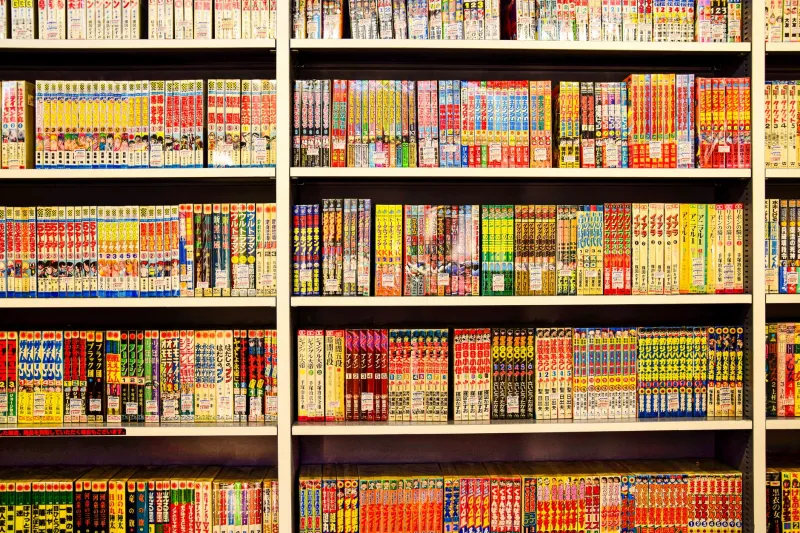
Walk into any comic shop in America right now and you'll notice something odd if you're paying attention. The big publisher books at the front of the store keep creeping upward — $4.99, then $5.99, and in some cases beyond. Meanwhile, tucked into the indie section, there's a whole shelf of complete, satisfying comics sitting at $4.99 or less. And according to the people behind the counters, those are the books that keep selling week after week.
This isn't an accident. It's a quiet strategy, and it might be the most interesting business story in comics right now.
The $5 Threshold Is Psychological, Not Arbitrary
Ask any retailer about the magic number and they'll tell you the same thing: five dollars is where hesitation lives. Under it, a customer browsing on a lunch break will grab a book on impulse. Over it, they pause. They put it back. They promise themselves they'll wait for the trade.
"The difference between $4.99 and $5.99 isn't a dollar," says one Midwest shop owner who asked to remain anonymous because he still carries plenty of Marvel product. "It's the difference between 'sure, why not' and 'let me think about it.' And when a customer starts thinking, they usually start walking."
For indie creators, that hesitation is the enemy. A first issue from an unknown creator has no goodwill to fall back on — no decades of continuity, no movie deal, no logo recognition. The price has to do the persuading. So the small presses have turned $4.99 — and increasingly $3.99 and even $2.99 — into a weapon.
Thin Margins, Real Money
Here's the counterintuitive part: a lower cover price doesn't necessarily mean less money for the creator.
The math works like this. A self-publishing creator printing a 32-page book through a printer like PrintNinja or BurgoOnDemand might have a per-unit cost of $1.20 to $1.80 depending on quantity. Sell direct at $5 and they clear over $3 a copy. Sell through Diamond or a distributor at a standard discount and the margin tightens, but it's still workable — especially when the alternative for a Big Two-adjacent creator is a flat page rate with no upside.
Compare that to the reader's side of the ledger. A Marvel reader pulling five monthly books at $5.99 is spending $30 a month — $360 a year — on serialized chapters of stories that often read better in trade anyway. An indie reader picking up three complete $5 graphic novellas is spending $15 a month and getting actual endings. That's not just cheaper. It's a better value proposition, and readers are starting to notice.
Digital Tiers and the Bundle Play
The other half of the strategy lives online. Small presses have gotten aggressive about digital pricing tiers — $2.99 PDFs, pay-what-you-want first issues, and bundle deals that move five books for the price of two.
The pay-what-you-want model in particular has become a genuine onboarding tool. Creators on itch.io and Gumroad report that free or flexible first issues convert casual readers into paying customers at surprisingly high rates. The logic is simple: get someone hooked on a $0 issue one, and issue two at $2.99 doesn't feel like a purchase. It feels like a continuation.
Bundles work the same way at the direct market level. Shops that run "buy two indie books, get the third free" weekends consistently move older stock while introducing readers to new series. The discount costs the creator margin on one book but builds a reader who might buy twelve.
What Retailers Actually Say Sells
We asked a handful of comic shop employees across the country what moves at the counter. The answers were consistent in ways that should make big publishers nervous.
Complete stories sell to casual browsers. Low prices sell to readers on a budget. And covers that clearly communicate genre — not house style, not variant bait — sell to everyone.
"People come in wanting to spend ten dollars," one retailer in Portland told us. "If I hand them two $5 books that are complete stories by creators they can actually talk to on Instagram, that's an easy sale. If I hand them two $5.99 issue ones that are part one of six, they'll take one, maybe."
That last point matters more than it seems. Indie creators are accessible in a way that corporate characters aren't. A reader who buys a $5 indie book can usually message the person who made it. That relationship, multiplied across hundreds of readers, is worth more than any advertising buy.
The Long Game
None of this means the Big Two are in trouble tomorrow. Marvel and DC sell on inertia, screen adaptations, and collector psychology that indie books can't replicate.
But the rack is a battleground of attention, and attention is exactly what's shifting. Every reader who discovers that five dollars buys a complete, satisfying story from a hungry creator is a reader recalibrated. And recalibrated readers don't un-learn that lesson.
The revolution isn't loud. It's fifty cents at a time, one complete story at a time, one converted reader at a time. And it's happening right now, on the shelf you probably walked past last week.