The Archive Effect: How Indie Creators Are Turning Forgotten Work Into Their Biggest Payday Yet

Photo: Unknown photographer, Public domain, via Wikimedia Commons
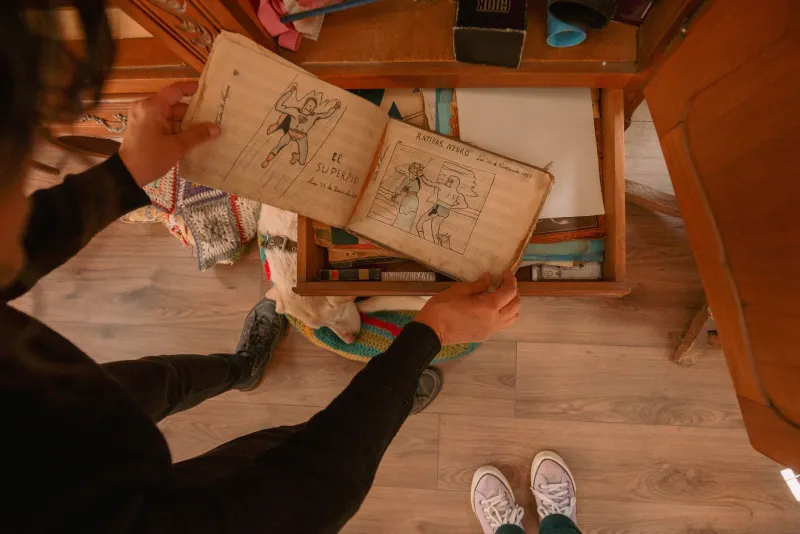
There's a folder on almost every indie creator's hard drive. You know the one. It's full of stories that were finished but never really launched, or launched quietly and sank without a trace. Projects that felt too weird, too early, too personal, or just too something to find an audience at the time.
For years, most creators treated those folders like a graveyard. Something to feel vaguely guilty about during late-night scrolling sessions. But a shift is happening — and it's changing how independent comic creators think about the economics of their entire body of work.
The Backlist Was Always There. The Audience Wasn't.
The concept of a backlist — a publisher's catalog of older titles that continue to sell long after their initial release — has driven traditional publishing economics for decades. Big houses have always understood that a deep archive is a financial asset. Indie creators, historically, have not had the infrastructure to treat their own work the same way.
That's changing fast. The combination of print-on-demand fulfillment, creator-owned storefronts, and the chaotic but genuinely powerful discovery engine of social media has made it possible for a story published in 2016 to find its first real audience in 2025.
And it's happening. Creators across the independent comics space are reporting that older work — sometimes work they'd essentially written off — is suddenly generating consistent sales after being surfaced by an algorithm, shared by a fan account, or spotlighted in a creator's own throwback content.
The Discovery Moment
For many creators, the process starts with a single unexpected spike. A post goes viral. A BookTok account features an older title. A Discord community starts discussing a story that predates most of its members' awareness of the creator. Suddenly, something that sold 40 copies at its launch is moving units every week.
The smart move — and not every creator makes it fast enough — is to treat that spike as a signal rather than a fluke. It means there's an audience for that work. It means the story resonates with someone. And it means the creator has an asset they've been undervaluing.
One webcomic artist who started publishing in the early 2010s described the experience this way: "I had this short story I made during a really difficult period in my life. I barely promoted it. I thought it was too raw to push. Then someone posted a panel from it on Twitter and it got thousands of shares overnight. I had no infrastructure to capture that — no easy purchase link, no collected edition, nothing. I left so much money on the table."
That lesson stuck. She spent the following months building out her archive infrastructure — clean product pages, collected print editions through a POD service, a simple landing page that organized all her older work by theme and tone. The next time an old piece got discovered, she was ready.
Recontextualization Is Its Own Creative Act
Here's where things get genuinely interesting from a creative standpoint. Simply making old work available isn't always enough. The most successful backlist revivals involve some degree of recontextualization — helping new readers understand why a story that exists matters now, in this moment, for them.
This can take a lot of forms. Some creators write new introductions for collected editions that frame the older work through their current perspective — what they were thinking, what they'd change, what they're surprised still holds up. That kind of honesty creates intimacy with readers who weren't there the first time.
Others lean into the gap between then and now as a feature rather than a flaw. A story about identity crisis that felt niche in 2014 might speak directly to a massive audience in 2025. The cultural context has shifted. The creator can help new readers see that connection without rewriting a single panel.
Some creators have gone further, creating companion content — new short stories, essays, or even social media threads that expand on the world of an older work and drive readers back to the original. It's content marketing, but it's also genuine creative extension. The archive becomes a living thing rather than a static catalog.
The Economics of Evergreen
Let's talk numbers for a second, because this is where the backlist strategy gets genuinely compelling for indie creators at every stage.
A new release requires a concentrated burst of promotional energy. You're building awareness from zero, competing for attention during a specific window, and often burning through your most engaged audience members on a single launch push. If the launch underperforms, recovery is hard.
A backlist title, properly set up, generates what people in the creator economy call passive or evergreen income. It sits in a storefront. It gets discovered through search. It shows up in recommendation algorithms. It gets shared in community spaces by readers who love it. Every week, without a concentrated promotional effort, it moves a few copies.
Multiply that across five, ten, or fifteen older titles and the math starts to look very different from the launch-and-hope model that dominates indie publishing strategy.
One creator with a catalog stretching back nearly a decade described their backlist income as "the thing that makes everything else sustainable." Their new work gets the spotlight and the excitement. Their older work pays the monthly bills.
What This Requires (And What Gets in the Way)
None of this happens automatically. The creators who are genuinely monetizing their archives have done real infrastructure work: clean, accessible storefronts; collected editions rather than scattered individual issues; metadata and tagging that makes older work discoverable; and a consistent practice of surfacing old work through their own channels.
The biggest obstacle, honestly, is psychological. It takes a shift in how creators think about their own history. Older work often carries embarrassment — the art that wasn't as refined, the stories that feel dated, the projects that flopped and still sting a little. Treating those projects as assets requires separating creative self-assessment from commercial reality.
Sometimes the work that feels most raw or unpolished is exactly what a new audience needs to see. It's proof of a journey. It's evidence of a voice developing. It's human in a way that more technically accomplished work sometimes isn't.
The archive isn't a graveyard. For a growing number of indie creators, it's turning out to be the foundation everything else is built on.