Redrawn From Memory: How Indie Creators Are Reclaiming Their Early Work and Defining Their Own Legacy
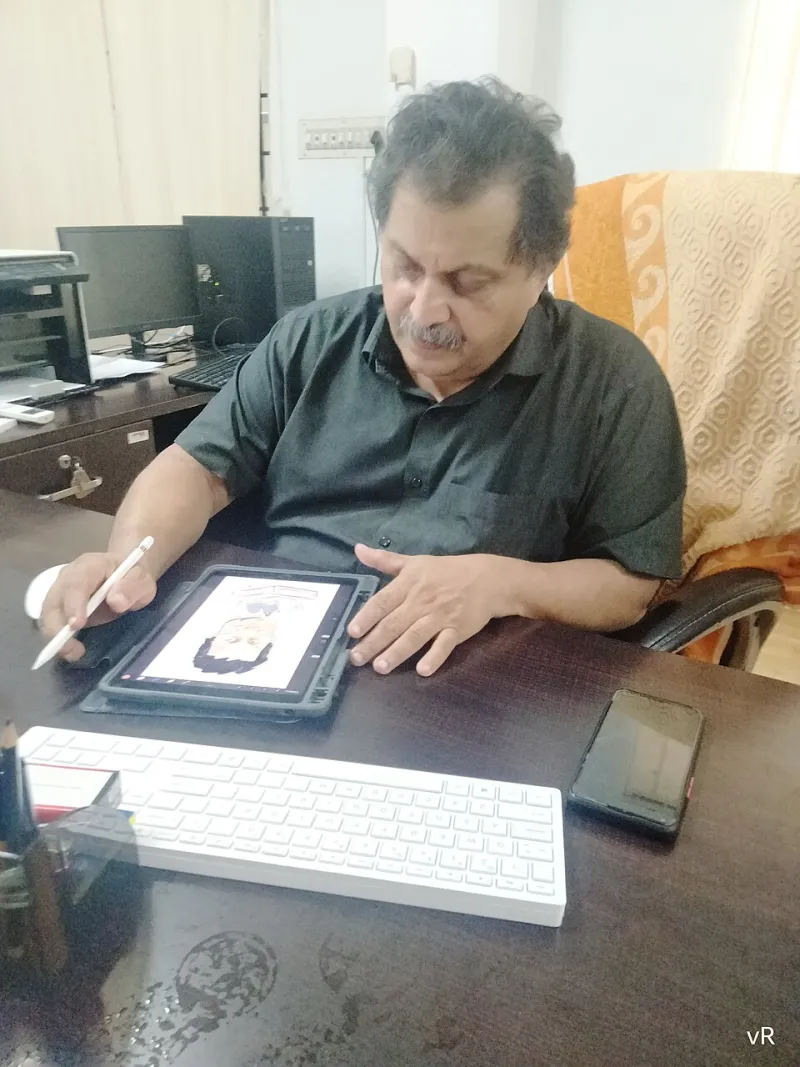
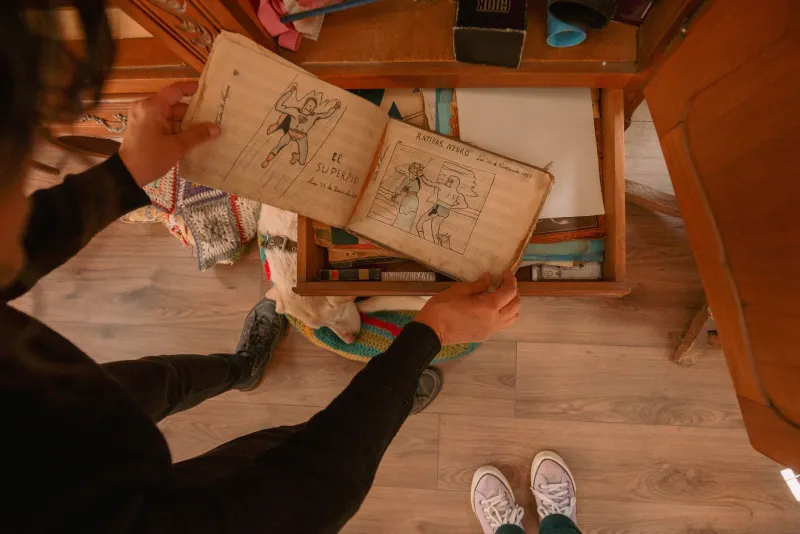
Photo: artist redrawing comic book pages at desk with original sketches and revised artwork, via cdn.luxatic.com
There's a particular kind of discomfort that comes with scrolling back through your own archive. Every indie comics creator knows it — that cringe-inducing moment when an early issue resurfaces and the linework looks rushed, the dialogue clunks like a dropped toolbox, and the panel composition makes you wonder what you were even thinking. For a long time, the standard move was to just... leave it. Move forward. Pretend the early stuff didn't exist.
But something's shifting. A growing number of independent creators are going back — not to reprint, but to rebuild. And the results are redefining what it means to own your own story.
The Difference Between a Reprint and a Reckoning
Let's be clear about something: what these creators are doing is not slapping a new cover on an old issue and calling it a collector's edition. That's a reprint. What's happening here is something closer to a sculptor going back to a rough clay model and finishing it with the hands of someone who actually knows what they're doing now.
Selective re-inking. Dialogue rewrites that preserve the story's soul while cutting the cringe. Panel restructuring that fixes pacing problems the original layout buried. These are surgical, intentional decisions — and they come with real stakes.
Take the experience of creators working in the vein of what Teshkeel Comics has always championed: original voices telling stories that belong to them, for audiences who've been waiting for exactly that. When you've spent years developing your craft and your perspective, going back to your debut work can feel like finding a letter you wrote at sixteen. The heart is there. The execution? That's another story.
Why Now? The Cultural Moment Behind the Revision Wave
A few things have converged to make this trend not just possible, but almost inevitable.
First, the tools are better. Digital illustration software, affordable print-on-demand services, and direct-to-reader platforms mean that a creator can produce a revised edition without a publishing contract or a warehouse full of unsold inventory. The barrier to re-releasing your own work has never been lower.
Second, the audience has matured alongside the creators. Readers who discovered an indie title five or six years ago have grown up, too. They're not just nostalgic — they're curious. They want to see what the creator sees now when they look back. A definitive edition isn't just a product; it's a conversation between who you were and who you've become.
Third — and this is the part that doesn't get talked about enough — the indie comics space is finally developing something it's always lacked: a sense of canon. Not the kind handed down by Marvel or DC, but a creator-owned, community-recognized canon built from the ground up. Revised editions are a way of saying, this is the version that counts. This is the one that represents me.
The Technical Choices That Make or Break a Revision
Here's where things get genuinely interesting, and genuinely hard.
Re-inking is probably the most common intervention. Early work often suffers from inconsistent line weight, shaky detail work, or inking choices that clash with the story's emotional register. Going back in with a steadier hand — or a more confident digital brush — can transform a page without changing a single story beat. The bones stay. The skin changes.
Dialogue rewrites are trickier. The temptation is to over-correct, to smooth out every rough edge and sand down every quirk that made the original feel alive, however imperfectly. The creators who do this well are the ones who treat dialogue revision like editing prose: cut what's redundant, clarify what's muddy, but leave the voice intact. If a character talked in a specific rhythm in the original, that rhythm probably still belongs to them.
Panel restructuring is the most ambitious intervention — and the one most likely to go sideways. Changing the sequence or composition of panels affects pacing, which affects everything. Some creators have found that early issues rushed through emotional beats that deserved more space, and a simple addition of a silent panel or a page break can completely change how a scene lands. Others have discovered that their original instinct was actually right, and the restructuring impulse was just anxiety talking.
The financial calculus matters too. A revised edition costs real money — time, production, potentially new printing costs. Creators who've done this successfully often treat it like a small Kickstarter moment: they announce the revision, build anticipation, and use pre-orders to fund the actual production. It turns a solo artistic decision into a community event.
The Emotional Weight Nobody Warns You About
Here's the part that doesn't show up in any how-to guide: going back to your early work is emotionally exhausting in ways that have nothing to do with the craft.
There's grief in it. You're confronting the gap between who you wanted to be and who you actually were at the time. There's also something unexpectedly tender about it — a recognition that the creator who made those rough early pages was doing their absolute best with what they had. Treating that work with care, even while revising it, is a kind of self-respect.
Some creators describe the process as finally finishing something that was always incomplete. Not because the original was a failure, but because the story always had a more complete version inside it, waiting for the artist to catch up.
There's also the question of what you owe your original readers. Some fans have a fierce attachment to first editions — the rough edges and all. A revised edition doesn't erase the original; it adds to the record. The healthiest framing seems to be this: the first edition is what the story was. The revised edition is what the story is.
Building a Canon That Belongs to You
What's most exciting about this trend isn't any individual revision — it's what it signals about where indie comics are headed.
For too long, the idea of a "definitive" version of a story was something that only happened when a major publisher decided it was worth the investment. Indie creators were supposed to be grateful for any version that made it to print at all. That framing is getting dismantled in real time.
When a creator goes back, revises, and re-releases their early work on their own terms, they're not just fixing old mistakes. They're asserting that their story has a legacy worth curating. They're saying that the arc of their creative life — messy beginnings and all — is something that deserves to be told with intention.
That's not just a publishing decision. It's a declaration.
And in a space built on original stories and infinite worlds, it might be the most powerful thing an indie creator can do.