Less Is Louder: How Indie Comics Creators Are Winning by Saying Less and Meaning More

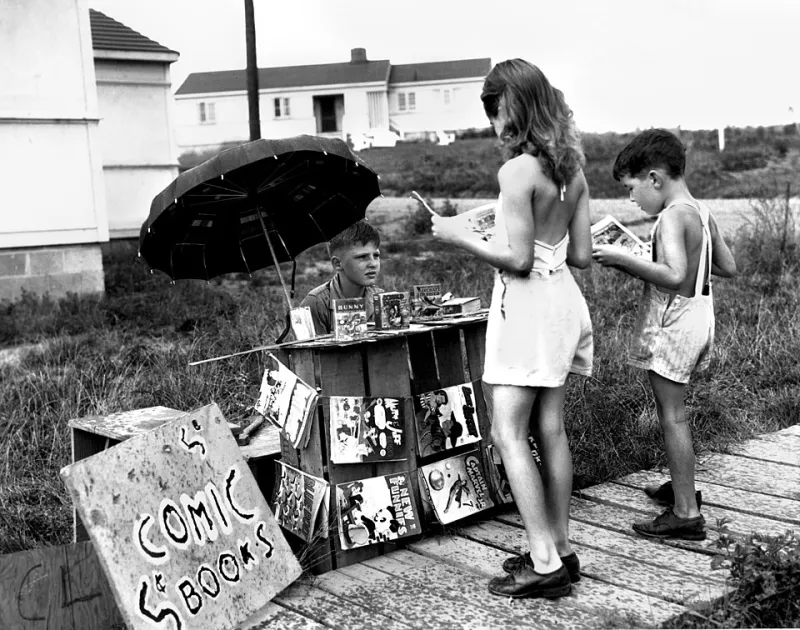
Photo: NPS, Public domain, via Wikimedia Commons
Everybody's screaming. That's basically the current state of indie comics marketing in a single sentence. Creators are posting daily sketches, behind-the-scenes reels, Patreon updates, Twitter threads, TikTok process videos, Discord announcements, and Substack newsletters — sometimes all in the same week. The logic makes sense on the surface: more content equals more visibility equals more sales. Except increasingly, it doesn't. And the creators quietly figuring that out are building some of the most loyal, hungry audiences in the independent comics space right now.
Here's the uncomfortable truth nobody in the "grow your platform" coaching industry wants to say out loud: attention is cheap, but anticipation is priceless. And you cannot manufacture anticipation when you never stop talking.
The Treadmill Nobody Signed Up For
Most indie creators didn't get into comics because they wanted to become content machines. They got in because they had a story — a specific, burning, personal story — that they needed to put on a page. Somewhere between launching a first issue and trying to stay relevant, a lot of them ended up on a treadmill they never asked to step onto.
The pressure is real. Algorithms genuinely do reward consistency. Social platforms are designed to punish absence. And the indie comics community, for all its warmth and solidarity, can sometimes reinforce the idea that visibility equals validity. If you're not posting, are you even working?
But here's what gets lost in that framing: audiences don't just want content. They want events. They want to feel like something is happening, something they might miss if they look away. Constant output flattens everything into background noise. Selective, deliberate release turns each new piece of work into an occasion.
What Strategic Silence Actually Looks Like
Let's be clear — this isn't about ghosting your audience or disappearing without context. The creators doing this well aren't just going dark and hoping people care. They're being intentional about how they go quiet and what they let through.
Some creators have shifted to releasing work in concentrated bursts: a full arc drops, they promote it hard for a few weeks, and then they step back. No filler posts. No "hey just checking in" content. When they show up again, it's because they have something real to show. That rhythm — presence, then space, then presence — trains an audience to pay attention when you do appear, because you're not crying wolf every Tuesday.
Others have leaned into deliberate scarcity on the production side. Limited print runs, no restocks, physical editions that genuinely sell out and stay sold out. This isn't an artificial gimmick when it's built into the creator's actual workflow and values — it's a statement about the work's worth. When something is rare, it becomes collectible. When it's collectible, it gets talked about. When people talk about it, new readers come looking.
Then there are creators who have weaponized the slow reveal. Rather than documenting every step of their process in real time, they work in private and surface only finished, polished pieces. No rough sketches unless they're truly extraordinary. No half-formed ideas. Just work that's ready to land. The result is a feed or a newsletter that feels curated rather than desperate — and readers respond to that quality signal in a big way.
The Mystique Factor
There's a reason certain indie comics take on a kind of underground legend status while technically comparable work gets ignored. Part of it is craft. Part of it is timing. But a significant part of it is mystique — the sense that the creator and the work exist slightly outside the normal churn, that they operate by different rules.
Mystique doesn't come from being secretive for its own sake. It comes from demonstrating, repeatedly, that you have standards about what you put into the world. When a creator shows up rarely but always with something that matters, readers start to feel like insiders when they pay attention. They become evangelists not just for the work itself but for the experience of following someone who doesn't waste their time.
This is deeply relevant for the kind of diverse, original storytelling that Teshkeel Comics is built around. When you're telling stories that don't fit the mainstream mold — stories from communities and perspectives that get flattened or ignored by the big publishers — the work itself carries weight. It deserves a presentation strategy that honors that weight rather than burying it in a flood of content that trains people to scroll past.
When Silence Becomes a Conversation
One of the counterintuitive things about stepping back from constant posting is that it often increases actual conversation. When you're not filling every available space with your own voice, your audience fills the gap. They speculate. They recommend your older work to newcomers. They create the kind of organic word-of-mouth that no marketing budget can manufacture.
This is especially powerful in niche communities — and indie comics readers are, gloriously, a niche community. They talk to each other. They have opinions. They remember when a creator did something unexpected or genuinely surprising. Give them space to have those conversations, and they'll do marketing work for you that money couldn't buy.
The Hard Part Nobody Mentions
Okay, so restraint is a strategy. Silence can be powerful. Less is sometimes more. All of that is true. But the hard part — the part that doesn't fit neatly into a listicle — is that this only works if the work itself is genuinely worth the wait.
You can't manufacture mystique around mediocrity. You can't create anticipation for something that doesn't deliver. The creators who succeed with this approach aren't succeeding because they post less. They're succeeding because they've committed to a standard of work that justifies the restraint. The silence is a signal, and the signal only means something if the work backs it up.
For indie creators who are just starting out, the path probably isn't to go dark immediately. Build enough of a presence that there's something to be quiet about. Establish enough trust that your absence is noticed rather than assumed. Then, once you've got that foundation, consider what it would mean to slow down, to be more selective, to treat your audience's attention as something precious rather than something to be constantly harvested.
The Loudest Move You Can Make
In a market where everyone is shouting, choosing not to shout is genuinely radical. It's also, increasingly, one of the smartest things an indie comics creator can do. The constant-content treadmill isn't a path to sustainability — it's a path to burnout dressed up as hustle culture.
The creators building real, lasting audiences in independent comics right now are the ones who understand that their work is the point, not the content surrounding it. They're protecting the work by protecting their own attention, their own energy, and their audience's capacity to be genuinely moved by what they make.
Sometimes the most powerful thing you can put in a panel is negative space. Turns out, the same principle applies to your entire creative presence. Know when to shut up. Let the work speak. And when you do show up, make it count.