After Hours and Ahead of the Curve: How Indie Comics Win by Publishing When Nobody's Watching

Photo: doe-oakridge, Public domain, via Wikimedia Commons
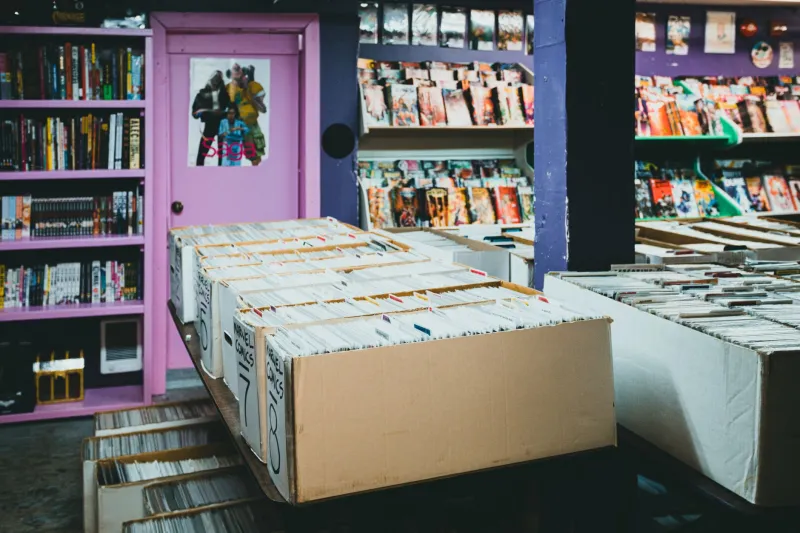
Wednesday has owned the comic book world for decades. New issue day. The sacred schedule. Walk into any comic shop on a Wednesday morning and you'll feel the ritual — the pull lists, the stacked boxes, the smell of fresh ink and anticipation. For the major publishers, that cycle is gospel. It's infrastructure. It's control.
But here's the thing about infrastructure: it only benefits the people who built it.
For independent creators, Wednesday's dominance isn't an invitation — it's a wall. And the smartest indie comics folks in the game right now aren't trying to scale it. They're building doors somewhere else entirely.
The Wednesday Problem Nobody Talks About
When Marvel and DC drop on the same day every week, they're not just competing with each other. They're consuming all the oxygen in the room. Retailers stock their shelves around that cycle. Comics media runs their coverage around it. Fan communities organize their conversations around it. The whole cultural apparatus of mainstream comics publishing orbits a single day of the week like it's gravitational law.
For an indie creator releasing their debut graphic novel or a new arc of their self-published series, launching into that noise is like trying to have a conversation at a stadium concert. Technically possible. Practically brutal.
So what happens when you don't show up on Wednesday at all?
Turns out, something pretty interesting.
The Surprise Drop Is Not a Gimmick
Music figured this out a while back. When Beyoncé dropped her self-titled album at midnight on a Friday in 2013 with zero traditional promotional runway, the internet lost its mind — not just because of the music, but because of the event of it. The surprise became part of the story. The drop itself was the announcement.
Indie comics creators have been quietly borrowing from that playbook, and it works for reasons that go deeper than hype.
When you release something unexpected — a new chapter on a random Tuesday, a limited print run announced at 11 PM with a 24-hour window — you're not just selling a comic. You're creating urgency. You're rewarding the people who are actually paying attention. You're making your most engaged readers feel like insiders, like they caught something the rest of the world missed. That feeling is worth more than any algorithm boost.
Creators building audiences on platforms like Instagram, Substack, and even TikTok have learned that off-peak drops often generate more organic engagement than carefully timed, heavily promoted launches. When there's less noise competing for attention, a genuine moment of surprise cuts through in a way that scheduled content rarely does.
Off-Peak Is Underpriced Real Estate
There's a commercial logic here that's easy to overlook. Digital storefronts, social media feeds, and email inboxes are genuinely less crowded at certain times. A Thursday afternoon drop, a Sunday night digital release, a Monday morning announcement — these windows don't carry the same promotional weight as Friday launches or Wednesday drops, but they also don't carry the same competition.
For indie creators operating without a marketing budget, that asymmetry matters enormously. You're not trying to outspend anyone. You're trying to be the most interesting thing in the room at a moment when the room is smaller and quieter.
Some creators have gotten methodical about this. They study when their specific audience is actually online and engaged — not when the industry says they should be — and they build their release calendar around those real patterns. A creator whose readership skews toward working adults might find that Saturday morning is their golden window. A creator with a younger, more globally distributed fanbase might discover that midnight EST hits different because it catches multiple time zones in their active hours simultaneously.
The data is there. The indie creators winning this game are actually looking at it.
Building Ritual Outside the System
Here's where it gets genuinely exciting: some indie creators aren't just releasing outside the traditional schedule — they're building their own recurring rituals that their audiences start to anticipate.
Imagine a creator who drops a new chapter of their ongoing story every first Sunday of the month. Not Wednesday. Not a major release day. Their own day. Over time, that becomes their Wednesday. Their readers build their own ritual around it. The first Sunday becomes something fans look forward to, talk about in advance, and share when it arrives. That creator has essentially built a publishing institution at the scale of their own community.
This is how indie publishing stops being reactive and starts being generative. You're not chasing the industry's calendar. You're making one.
The Psychological Edge of Scarcity and Surprise
There's also something worth saying about the psychology of how readers experience indie comics specifically. The relationship between an indie creator and their audience tends to be more personal, more direct, and more emotionally invested than the parasocial connection most readers have with a corporate publisher. When that creator shows up unexpectedly with something new, it doesn't feel like a product launch. It feels like a message from someone you actually care about.
That emotional texture changes how people receive the work. A surprise drop from an indie creator you've been following for two years hits differently than a scheduled Marvel event. One is content delivery. The other is a genuine moment between a storyteller and their people.
Scarcity amplifies this. Limited print runs with tight windows, exclusive editions that won't be restocked, digital releases that come down after a week — these aren't just marketing tactics. They're ways of signaling that this thing you're making is real, specific, and finite. That it matters enough to be treated like it matters.
The Bigger Picture
What the midnight economy really represents is indie creators reclaiming agency over something the traditional publishing world never handed them in the first place: the terms of their own existence in the market.
The Wednesday cycle, the Diamond distribution era, the comic shop monoculture — all of it was built to serve a certain kind of publishing at a certain kind of scale. Independent creators were always afterthoughts in that architecture, tolerated at best and actively disadvantaged at worst.
Building outside those structures isn't just a survival strategy. It's a creative statement. It says that the story you're telling doesn't need the industry's permission to find its audience. It says that the readers who matter to you are out there, awake at midnight, scrolling past the noise, waiting for something that feels like it was made specifically for them.
Because it was.
And it dropped when nobody was watching — which is exactly why they saw it.