Beyond the Staple: Why the Smartest Indie Creators Are Ditching the Standard Comic Format
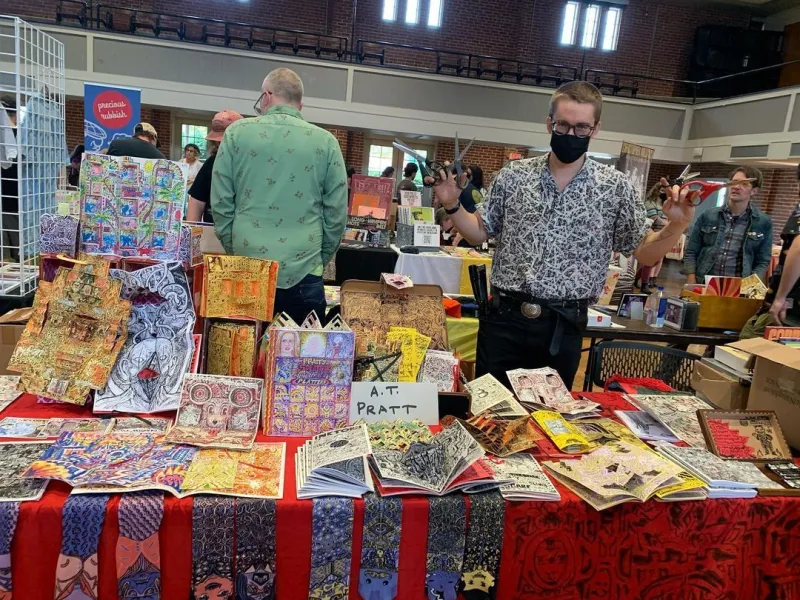
Photo: independent comic zines stacked on table at convention, via 64.media.tumblr.com
Walk into any comic convention in America and you'll see it: table after table of the same stapled, 32-page floppy. It's the format we inherited from the newsstand era, and for a lot of indie creators, it's simply the default. Nobody chose it. It chose them.
But spend enough time on the con floor — or on Webtoon, or in the manga section at Barnes & Noble — and you start noticing something. The creators selling out their runs aren't always the ones drawing the best floppy. They're the ones asking a question most of us never bother with: what format does my story actually want to be?
The Zine That Outsold the Floppy
Take Marisol Vega, a Chicago-based cartoonist who spent three years putting out a straightforward superhero-ish series in standard comic format. Decent reviews. Middling sales. Then, almost out of spite, she printed her next project as an 8.5x11 saddle-stitched zine with heavier paper and zero ads.
"It sounds stupid, but the format did the marketing for me," she told us over email. "People picked it up because it looked like an object. Like an artifact. My floppy sat next to two hundred other floppies. The zine sat next to nothing."
Vega's first zine printing of 150 copies sold out in a weekend at CAKE in Chicago. Her previous floppy, with a similar print run, had taken eight months to move.
There's a lesson here about scarcity and presentation — but also about budget. A zine run costs less, risks less, and reads as more personal. For creators without a distributor, that matters.
Thinking in Manga-Sized Chunks
Meanwhile, across the country in Portland, Derek Osei made the opposite move. He abandoned singles entirely and started releasing his fantasy series as 100-plus-page digest volumes — the manga trim size, right-to-left reading order optional.
"American readers under 30 grew up on manga," Osei says. "They don't want a floppy. They want a chunk. Give them 120 pages they can binge in one sitting and they'll pay $12 without blinking. That's three issues' worth of revenue for half the printing headache."
Osei's theory tracks with what we're seeing on the retail side. Manga has eaten a massive share of the US comics market over the past five years, and indie readers' habits have shifted with it. The digest format signals "complete story, worth your time" in a way a #1 issue never can.
The Vertical Experiment
And then there's the third path: the webtoon. Jae Lin, a Los Angeles cartoonist, releases her romance series exclusively as vertical-scroll episodes before collecting them into print volumes. The scroll format lets her build an audience of thousands before she ever spends a dollar on printing.
"Vertical scroll is a reader-retention machine," Lin says. "The thumb keeps moving. But the real trick is that when I do print, my webtoon readers buy the book twice — once to support me, once to own it."
So Which Format Wins?
Here's the uncomfortable answer: none of them, universally. What wins is intentionality. The floppy makes sense for serialized work with a monthly rhythm. The zine makes sense for short, personal, object-like storytelling. The digest makes sense for bingeable genre work. The vertical scroll makes sense for building audience before inventory.
The format war isn't really a war. It's a menu — and too many indie creators have never looked at it. Your story already knows what shape it is. Your job is to listen before you send anything to the printer.