Better Together: Why the Smartest Indie Comic Creators Are Ditching the Solo Hustle
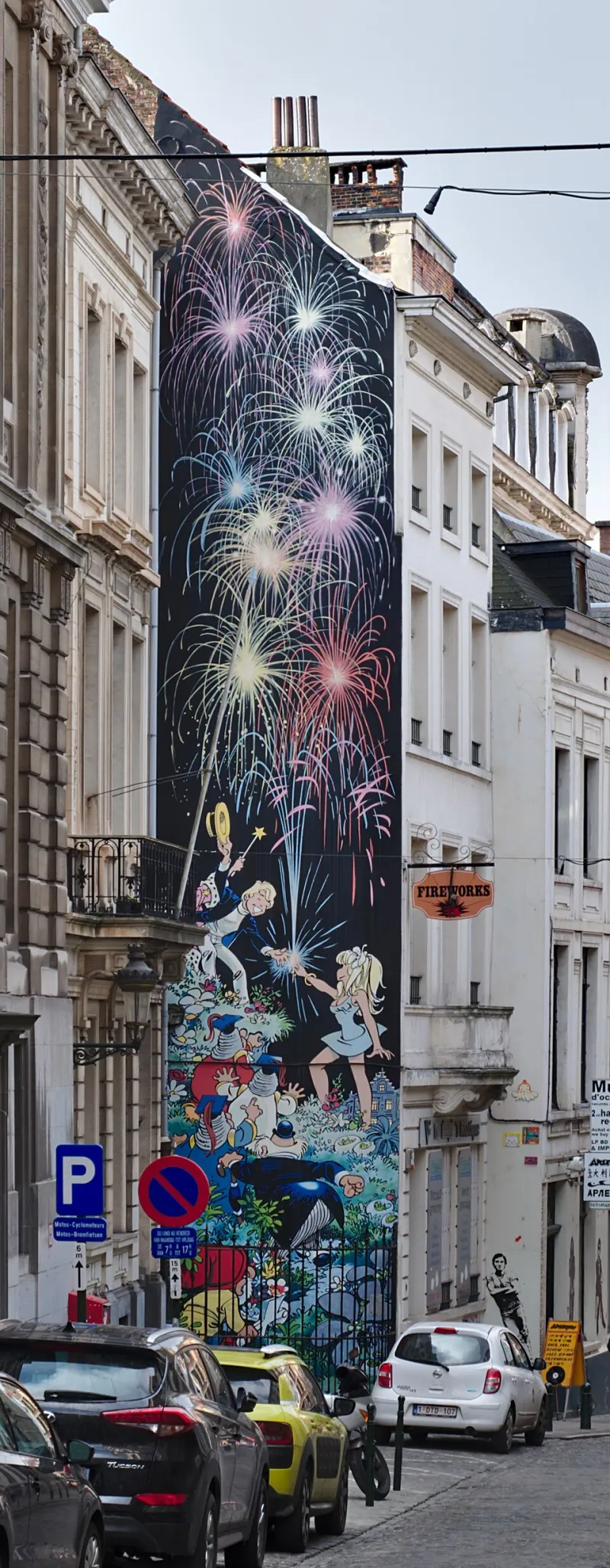
Photo: Trougnouf, CC BY 4.0, via Wikimedia Commons
There's a certain romance to the image of the lone comic creator hunched over a drawing tablet at 2 a.m., building entire worlds out of sheer willpower and cold brew. It's a compelling story. It's also, increasingly, not how the most exciting indie work is getting made.
Across the US independent comics scene, something quieter but arguably more transformative than any single breakout title is happening: creators are teaming up. Not because they have to. Because they've figured out that collaboration, done right, doesn't dilute a creative vision—it amplifies it.
The Myth of the One-Person Show
Let's be honest about something. The idea that the best indie comics come from a single mind doing everything—writing, penciling, inking, coloring, lettering, and then somehow marketing the finished book—was always a bit of a fantasy. Or at least, a very expensive one in terms of time and creative burnout.
"I spent two years trying to do everything myself on my first book," says Dani Reyes, a Portland-based creator whose debut graphic novel Saltwater Saints quietly became one of the most talked-about queer fantasy releases of last year. "The art suffered because I was exhausted from writing. The writing suffered because I was stressed about the art. By the end, I didn't even like the story anymore."
For her follow-up, Reyes brought in a co-writer and a dedicated colorist. The result? A book that shipped on schedule, looked sharper, and—maybe most importantly—one she actually felt proud of when she held it in her hands.
That's not an unusual story anymore. It's practically a blueprint.
What Strategic Collaboration Actually Looks Like
Not all creative partnerships are created equal, and the indie creators building sustainable careers know the difference between a good collab and one that quietly derails a project.
The most effective partnerships tend to fall into a few distinct shapes. There's the writer-artist duo, probably the most classic comics pairing, where one person handles script and story structure while another takes full ownership of the visual world. When it clicks—think of the long-running creative marriages that have defined mainstream comics—it produces something neither person could have made alone.
Then there are indie collectives, small groups of creators who pool resources, share promotion, and sometimes cross-collaborate on each other's titles. The Brooklyn-based collective Inkwell Assembly, for example, operates less like a publisher and more like a creative co-op: each member maintains full ownership of their work, but they share a unified brand presence at conventions, split table costs, and actively cross-promote to each other's audiences. Every member's fanbase becomes a potential entry point for every other member's work.
"It's not charity," says Marcus Webb, one of Inkwell's founding members. "It's just smart. My readers who are into afrofuturism are probably going to be interested in what Priya's doing with her South Asian mythology series. Why wouldn't we make it easy for them to find each other?"
There's also the increasingly common specialist partnership model, where a creator with a strong vision but a specific skill gap brings in a professional for that one piece of the puzzle. Lettering, in particular, has become a recognized art form in its own right, and plenty of indie creators who would never consider bringing in a co-writer are happily hiring dedicated letterers—because they've seen what a great letter job does for pacing and readability.
Finding Your People (Without Losing Your Mind)
The practical question, of course, is how you actually find collaborators who are the right fit—creatively, professionally, and personally. Because a bad collab isn't just a creative problem. It can tank a friendship, a project, and a good chunk of your savings if contracts aren't handled properly.
Most experienced indie creators will tell you the same thing: start in the community before you start in the DMs. Platforms like ComicsExperience, the webcomic forums on Reddit, and the sprawling Discord servers dedicated to indie publishing are full of creators actively looking for collaborators. Convention small-press rooms are genuinely one of the best places to meet potential partners face-to-face and get a real sense of someone's work ethic and creative sensibility before you commit to anything.
"I found my colorist at a zine fest in Chicago," says Yolanda Fitch, whose horror anthology Hollow Season has been running successfully for three years. "We spent like forty-five minutes just talking about color theory and old EC Comics. By the end I knew her aesthetic was exactly what I needed."
That kind of organic connection matters. But so does the paperwork.
Structuring Deals That Actually Hold Up
Here's where a lot of promising indie collabs fall apart: the money conversation gets awkward, nobody puts anything in writing, and when the project actually starts generating revenue—or doesn't—resentment fills the gap where a contract should have been.
The good news is that formal legal agreements don't have to be expensive or complicated. Organizations like the Comic Book Legal Defense Fund and resources through Volunteer Lawyers for the Arts can help creators in most major US cities access basic contract templates and legal guidance at low or no cost. At minimum, any collaboration should document who owns what, how revenue gets split, what happens if someone needs to exit the project, and what the credit structure looks like.
"The contract conversation is actually a great filter," says Webb. "If someone gets weird or evasive when you bring up putting things in writing, that tells you something important before you've invested anything real."
For collectives, it's worth looking at how groups have structured themselves legally—some operate as LLCs, others as informal partnerships with written agreements. Neither is automatically better; it depends on the scale of what you're building and how much shared infrastructure you actually need.
The Stories That Come Out the Other Side
What's most compelling about the collaboration shift in indie comics isn't really the business logic, though that's real. It's what happens to the work itself.
Stories built by people who genuinely complement each other—who challenge each other's blind spots and bring distinct strengths to a shared vision—tend to have a depth and texture that solo work, however skilled, sometimes lacks. A writer who has a visual collaborator pushing back on their panel descriptions learns to write differently. An artist working with a dedicated colorist discovers things about their own linework they couldn't have seen alone.
That's ultimately what Teshkeel has always been about: the idea that the most powerful stories come from the fullest possible range of voices and perspectives. Sometimes that means a single creator telling a deeply personal story. And sometimes it means two or five or ten creators building something none of them could have imagined working alone.
The indie comics world is figuring out, creator by creator and collab by collab, that there's no weakness in asking for a collaborator. There's just better work waiting on the other side of that ask.