Second Chances, Smarter Sales: How Indie Creators Are Turning Reprints Into a Revenue Revolution
There's a moment every indie comics creator knows too well. The Kickstarter wraps, the books ship, the launch buzz fades — and suddenly you're staring at a story you poured years into, wondering if its commercial life is already over. For a long time, that feeling was just accepted as part of the deal. You launched, you sold what you sold, and you moved on.
But something has shifted. A new generation of independent creators is refusing to treat their debut print run as a finish line. Instead, they're treating it as a proof of concept — a first draft of a publishing strategy that gets smarter, and more profitable, the second time around.
Reprints, special editions, and expanded volumes aren't just survival tactics anymore. In the hands of savvy indie publishers, they're becoming a deliberate, data-informed art form.
Why the First Run Is Never the Whole Story
Here's a truth that traditional publishing figured out decades ago but that indie creators are only now fully embracing: scarcity and timing are as powerful as the content itself. When a book sells out its first run, that's not just a win — it's a signal. It tells you there's demand you haven't fully captured yet, a readership that showed up and found an empty shelf.
Smart creators are learning to read those signals early. Pre-order numbers, convention sell-through rates, social media engagement after launch — all of it adds up to a picture that tells you whether a second edition makes financial sense. And increasingly, the math is working out in favor of going back to press.
The key difference between a reprint that flops and one that thrives? Intentionality. Slapping the same book back on shelves with a new print date isn't a strategy. It's a missed opportunity.
The Collector Economy Is Real, and Indie Creators Are Finally Tapping It
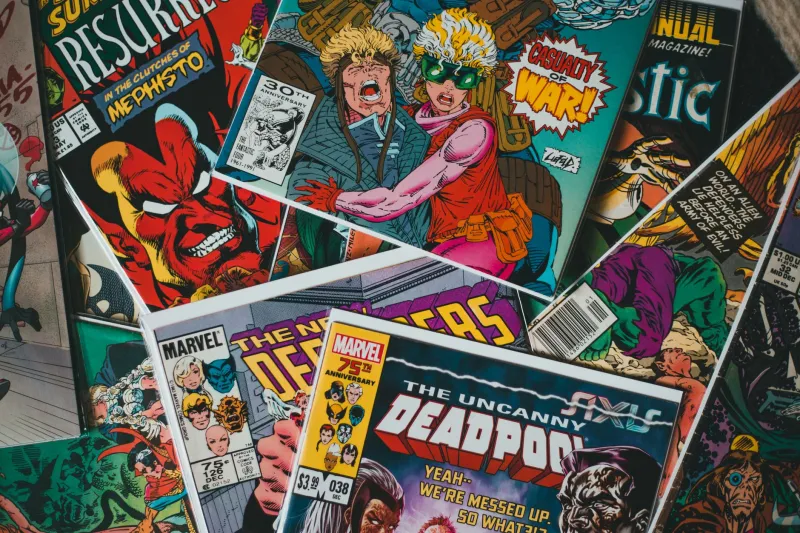
Walk the floor of any major comic convention — San Diego, New York, C2E2 — and you'll see it immediately. Readers aren't just buying comics. They're building collections. They want the variant cover. They want the signed bookplate. They want the edition that feels different from what everyone else owns.
Major publishers have exploited this instinct for years, sometimes cynically. But indie creators have a genuine advantage here: authenticity. When an independent artist offers a limited-run second edition with new cover art, an expanded sketchbook section, or hand-numbered prints, it doesn't feel like a cash grab. It feels like an event.
Creators who've cracked this model talk about transforming their reader base from buyers into stakeholders. When someone owns the deluxe second edition with the creator commentary and the alternate ending — and only 500 copies exist — they're not just a fan. They're an advocate. They're the person telling their friends to grab a copy before it's gone.
What Goes Into a Winning Second Edition
Not every reprint needs to be a production overhaul, but the ones generating the most buzz share a few common ingredients.
New visual elements are the most obvious lever. A variant cover from a guest artist — especially one with their own following — brings in readers who skipped the original. It also gives existing fans a reason to double-dip, and in collector culture, double-dipping is practically a love language.
Behind-the-scenes content is another crowd-pleaser. Process pages, early sketches, rejected panel layouts, creator commentary — this stuff costs relatively little to produce but adds enormous perceived value. Readers who loved the story want to understand how it was made. Giving them that access deepens the relationship and justifies a higher price point.
Corrected and expanded editions are increasingly popular, particularly for creators who launched early in their careers and have since leveled up their craft. Revisiting a debut book to fix coloring inconsistencies, tighten dialogue, or add a new chapter isn't admitting failure. Done right, it's a narrative in itself — the creator growing alongside their work.
The Financial Calculus Nobody Talks About
Let's be honest about the part that makes a lot of creators nervous: the money. Reprints require upfront investment, and for small indie operations running on tight margins, that's a real risk.
The creators navigating this most successfully are doing their homework before committing. They're looking at their existing sales data and asking hard questions. How many copies sold in the first three months versus the following year? Is there still organic demand, or has the audience moved on? What's the minimum print run that gets them to a price point their readers will actually pay?
Many are choosing shorter, higher-quality print runs over massive quantities. Print-on-demand has improved enough that some creators are using it strategically for standard editions while reserving offset printing for premium, limited runs where the paper stock and production quality are part of the appeal.
Crowdfunding is still in the mix, but creators are using it differently for reprints than for original launches. A second-edition campaign isn't about proving the concept — that's already done. It's about gauging demand precisely before going to press, which dramatically reduces financial risk. Some creators are finding that a reprint campaign, backed by an existing fanbase, outperforms their original launch with a fraction of the marketing effort.
Timing Is Everything (And Most Creators Get It Wrong)
One of the most common mistakes? Waiting too long. There's a window of momentum after a successful launch — usually somewhere between six months and two years — where audience energy is still alive and discoverable. Let it slip, and a reprint becomes an uphill battle to remind people why they cared in the first place.
The creators winning at this game are building the reprint into their original publishing plan before the first book even ships. They're thinking about what the second edition could include while they're still producing the first. That forward-thinking approach means they're ready to move quickly when the data tells them the moment is right.
The Bigger Picture
What's really happening here is a maturation of the indie comics business model. Independent creators are learning to think like publishers — not just artists — without sacrificing the authenticity that makes their work worth buying in the first place.
The reprint isn't a consolation prize or a sign that you couldn't move enough copies the first time. In the hands of a creator who knows what they're doing, it's a second act. A chance to reach readers you missed, reward the ones who showed up early, and prove that your story has staying power in a market that moves fast and forgets faster.
For a platform like Teshkeel Comics, built on the belief that original stories and diverse voices deserve permanent space in the cultural conversation, that staying power matters. The best indie comics aren't meant to be consumed and discarded. They're meant to live on shelves, get passed between friends, and keep finding new readers years after the launch hype has cooled.
The reprint is how you make sure that actually happens.